
Medical Device Compliance & Certification Summit – Why It Matters?

Medical Device Compliance & Certification Summit – Why It Matters?

Medical device and diagnostic compliance expectations are shifting earlier in the product lifecycle. IEC 60601 and related standards are no longer something teams can “handle at test.” Regulators increasingly expect standards interpretation, risk decisions, and test strategy to be visible and justified during design reviews and technical documentation development.

This shift is showing up in real ways – through tougher design reviews, deeper questions during pre-submission interactions, and increased scrutiny of how standards were applied, not just whether a final test report exists.

To address this reality, Eisner Safety Consultants (ESC) is working with Nemko to deliver a three-day, in-person Medical Device Compliance & Certification Summit focused on how standards, testing, and regulatory expectations intersect in real programs.

This is a focused, three-day program for engineering, regulatory, and compliance teams navigating IEC 60601, IEC 61010, EMC and RF requirements, certification strategy, and regulator guidance documents across FDA, EU, and other markets.
IEC 60601-1, 4th Edition Survival Guide – Why It Matters For MedTech

IEC 60601-1, 4th Edition Survival Guide – Why It Matters For MedTech

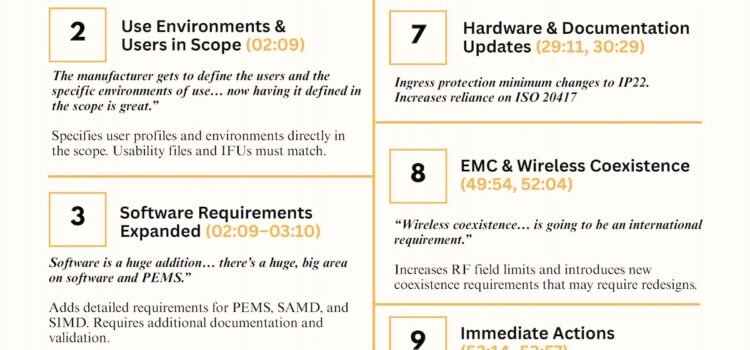
The 4th Edition of IEC 60601-1 is no longer a future concern. Eleven of the twelve hazard fragments (WGs 37–48) have circulated Committee Drafts (CDs). All fragments have issued first CDs (WG 47 is at CD2), except WG 45 (Optical Radiation Hazards).

That means manufacturers, design houses, trade associations, test houses, and regulators must follow the working group outputs closely. If you cannot stay directly engaged in National or International (IEC) committees, you will need trusted expert guidance. These changes will impact design, QMS, labeling and IFUs, documentation, and test strategies.

Major changes to IEC 60601-1 are closer than you think

Impact of IEC 60601-1, 4th Ed.

Once the 4th Edition is published, redesigns and QMS updates will be far more costly.

Direct insights from someone in the development of IEC 60601-1, 4th Edition
Get an insider’s view of the upcoming changes, their real-world impact, and how to prepare, from someone directly involved in developing the standard.

🎩 Get your reviewer’s hat on – IEC 60601-1, 4th Edition Draft Fragments Have Dropped‼️ 🚀

🎩 Get your reviewer’s hat on – IEC 60601-1, 4th Edition Draft Fragments Have Dropped‼️ 🚀

Over the last two weeks – and with a Friday night (6/20/25 Geneva time – late) finale still to come – we’ve seen CD1s and CD2 (WG 47 ONLY) fly out for Fragments 5, 6, 7, 8, 10, 11, and 12 from WG 41 through WG 48, but for WG 45.

This is not just standards spring cleaning – these are foundational changes to the IEC 60601-1 General Standard, folding the Collateral standards into the core. If you have medical electrical equipment, medical electrical systems or software SaMD or SiMD you need to be aware of these changes. If you’re a manufacturer, test lab, trade association, Notified Body, Regulator or other interested party who owns a risk file… you need to review this.

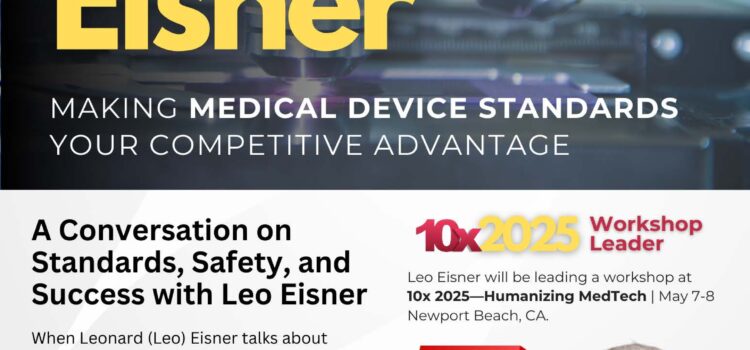
Join me for an Interactive Workshop Identifying Standards, Guidances, & Turn Standards into Your Competitive Advantage @ 10X

Join me for an Interactive Workshop Identifying Standards, Guidances, & Turn Standards into Your Competitive Advantage @ 10X

Don’t make the 5 costly mistakes companies make with Medical Device Standards. Learn from the IEC 60601 Guy himself.:

Late Identification of Applicable Standards: Leads to expensive redesigns and delayed timelines

Ignoring Expert Standards Guidance: Results in regulatory rejections and costly resubmissions

Unprepared Risk Management File for Testing: Risks unnecessary costs due to lack of strategic planning for compliance.

Unprepared Regulatory Submissions: Leads to costly setbacks and market-entry delays

Underestimating Education and Training: Creates knowledge gaps, increasing errors and compliance risks.